
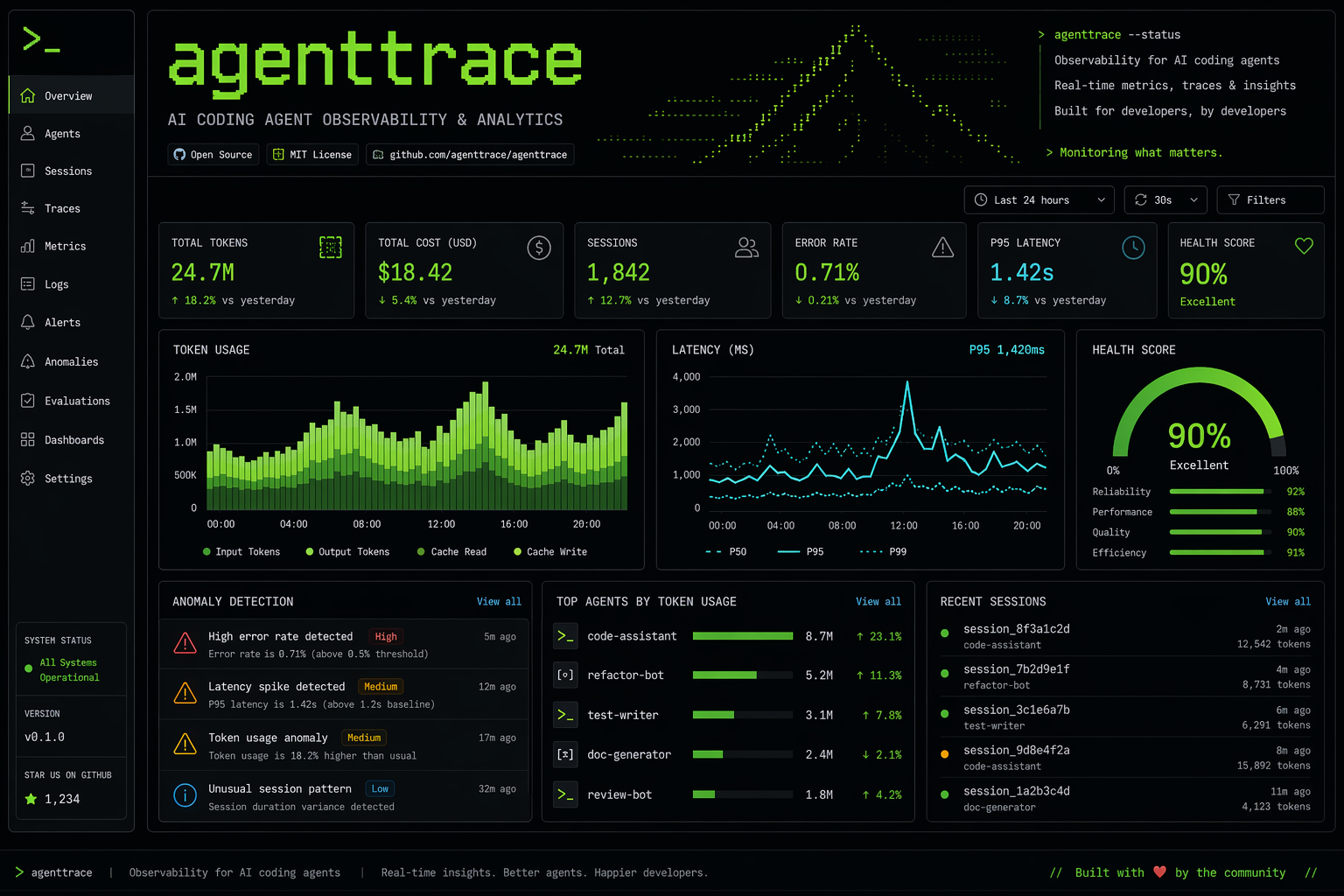
AI coding agent session history starts with local logs.
agenttrace reads the session files your coding agents already write and turns them into cost, token, time, and slow-run evidence without a hosted backend.
What AI agent session history should answer.
Traditional logs show that something happened. Coding-agent session history should show what multiple agents spent across cost, tokens, and time, then explain why one run stalled or drifted into slow tool calls.
agenttrace --overview -f json
agenttrace --overview -f html -o agenttrace-overview.html
agenttrace --overview --fail-under-health 80 --fail-on-critical --max-tool-fail-rate 15
Local-first, source-aware, focused on spend and speed.
agenttrace is built for developers who want AI coding agent session history without sending prompts, code, or private logs to a hosted dashboard. It supports Claude Code, Codex CLI, Gemini CLI, Qwen Code, Cline, Aider, Cursor exports, Hermes Agent, OpenCode, OpenClaw, Pi, Oh My Pi, Kimi CLI, Copilot-style logs, and generic JSON/JSONL traces.